

Conclusion of Joint Workshop Between Qatar Precision Health Institute
January 21,2026

Conclusion of Joint Workshop Between Qatar Precision Health Institute, Principles and Practice of Clinical Research (PPCR) Program from Harvard T.H. Chan School of Public Health, and the College of Health Sciences at Qatar University
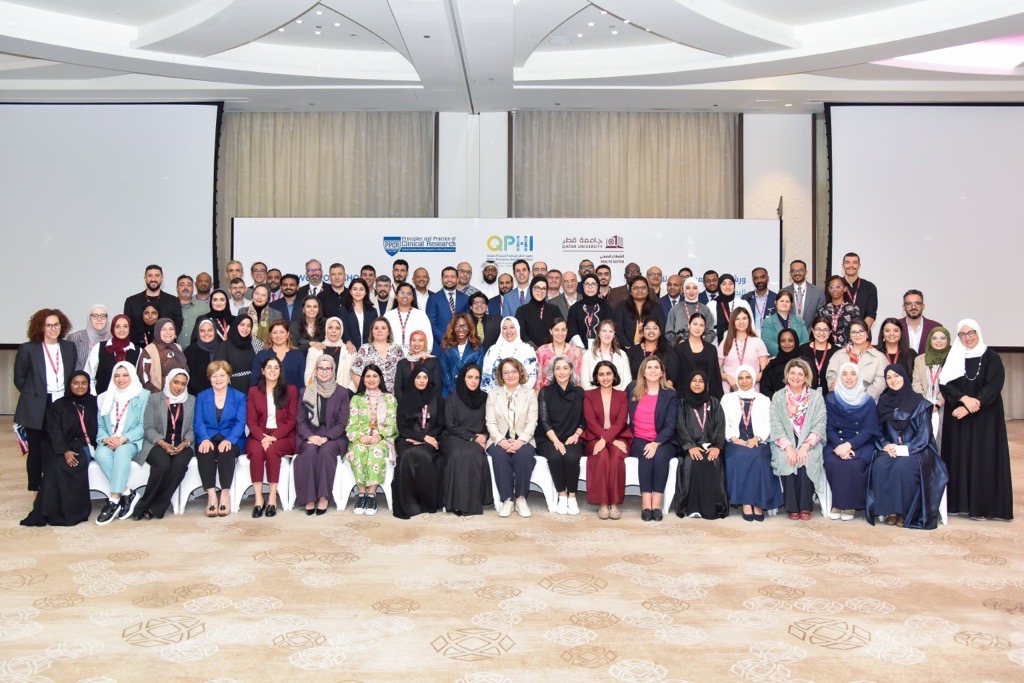
| Qatar Precision Health Institute (QPHI), in collaboration with the Principles and Practice of Clinical Research (PPCR) Program from Harvard T.H. Chan School of Public Health and the College of Health Sciences at Qatar University, concluded a joint workshop on Clinical Research in Precision Medicine, Rare Diseases, and Pharmacogenomics, held from 8 to 11 December 2025. The workshop brought together a distinguished group of specialists and experts from Qatar and abroad, as well as participants, researchers and graduate students from the healthcare sector from over 15 countries from around the world. The workshop, titled "Clinical Research in Precision Medicine, Rare Diseases, and Pharmacogenomics," was organized under QPHI’s Tanawwo’ Program. Participating experts delivered advanced training that combined traditional scientific foundations with modern innovations in artificial intelligence, big data, genomics, and clinical trials. Dr. Radja Badji, Co-Chair of the Workshop and Director of Translational Genomics at the Qatar Precision Health Institute, commented: “Since our future plans include expanding the applications of genomic research to better serve patients, we saw the necessity of enhancing the skills of healthcare professionals in clinical trials. For this reason, we designed this interactive workshop.” Prof. Felipe Fregni, Chair of the workshop and Professor of Physical Medicine and Rehabilitation at Harvard Medical School and Professor of Epidemiology at the Harvard T.H. Chan School of Public Health: “This workshop represents a powerful example of how international collaboration can accelerate the growth of clinical research in precision medicine. By bringing together experts, clinicians, and young researchers, we are building the foundation for a stronger, more innovative research ecosystem that will ultimately improve patient care in Qatar and beyond.” The workshop included a series of specialized lectures, panel discussions, and hands-on training programs that focused on scientific research ethics tailored to Qatar and the region, regulatory frameworks, adaptive clinical trial design, patients records, pharmacogenomics applications, and AI-based technologies in advancing clinical research. These sessions contributed to enhancing knowledge exchange and developing researchers’ skills, as part of joint efforts to support the precision health ecosystem in the State of Qatar. Commenting on this, Dr. Firas Al Ali, Director of Scientific Research and Graduate Studies at the Qatar University Health Cluster, said: “This workshop underscores the importance of investing in building research capacities to support the advancement of precision medicine in Qatar. We are proud of our partnership with the Qatar Precision Health Institute and Harvard University, as it contributes to knowledge transfer, enhances researchers’ skills, and paves the way for advanced research that brings direct benefits to the health of the community.” On this occasion, the organizing entities emphasized that the workshop contributed significantly to building bridges of collaboration between health and academic institutions, while offering participants a unique opportunity to engage with distinguished international experts from Harvard T.H. Chan School of Public Health, QPHI, and Qatar University. Additional speakers included specialists from the Ministry of Public Health, Hamad Medical Corporation, Hamad Bin Khalifa University, the World Health Organization, and other institutions within the healthcare sector. This collective engagement reinforces Qatar’s position as a leading regional hub in precision health research. The organizers also expressed appreciation for the strong participation from specialists and researchers, noting that the workshop represents an important step toward strengthening national capabilities and empowering current and emerging professionals with modern tools and methodologies that elevate the quality of health research and clinical services in the country. |